
Culinary Inspiration by Otao Kitchen

Cook . Connect. Celebrate


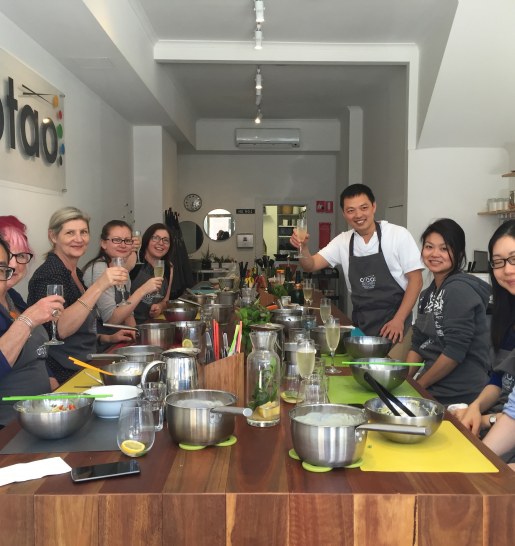
At Otao Kitchen, we believe cooking is one of the most powerful ways to connect—with yourself, your loved ones, and the world around you. It can put a smile on your face, bring family and friends together, and create memories that last a lifetime.
But cooking is more than just connection—what you choose to cook and eat impacts your health and the health of the planet. That’s why we’re passionate about making it as easy and enjoyable as possible for everyone to experience the joy of good, home-cooked food.
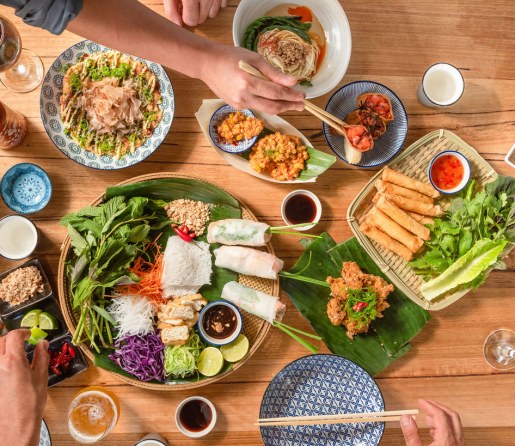
“Cook to Connect” is at the core of everything we do. Through our blog, food experiences, and global travel inspiration, we explore the deep relationships between cuisine, culture, and community. From vibrant street food across the globe to time-honoured family recipes passed through generations, we share with you the stories, flavours, and traditions that shape the way the world eats.
Here, you’ll find:
Practical cooking tips and techniques
Authentic global recipes
Cultural and culinary insights
Event planning advice
Kid-friendly cooking inspiration
Travel stories and destination food guides
Seasonal celebrations and global food festivals
Whether you're in your home kitchen or exploring a faraway land, we’re here to help you cook with purpose—and connect with the world through food.

Putting Bush Tucker on the Menu: Celebrating Australia's Native Flavours

Putting Bush Tucker on the Menu: Celebrating Australia's Native Flavours

Australia's culinary landscape is as vast and diverse as its terrain—and at the heart of this uniqueness lies bush tucker, the traditional foods used by Indigenous Australians for tens of thousands of years. From native fruits and seeds to herbs and spices, bush tucker is more than just a trend—it's a rich part of Australia's cultural heritage that’s transforming the way we cook and eat.

Learn more

The Ultimate Guide To Organising Your Kitchen

The Ultimate Guide To Organising Your Kitchen

Having an organised kitchen is not only aesthetically pleasing but also makes cooking and meal preparation a breeze. If you constantly search for ingredients or struggle to locate your cooking utensils, it's time to declutter and organise your kitchen.

Fortunately, this article is your ultimate guide. It will provide you with a plan to transform your kitchen into a well-organised space that maximises efficiency and minimises stress.

1.     Declutter Your Kitchen

Before you start organising, it's essential to declutter your kitchen. Begin by going through your cabinets, pantry, and drawers. For instance, you may come across a chipped coffee mug that you rarely use or a set of mismatched plastic containers with missing lids. It's also best to eliminate expired food, broken utensils, and duplicate items.

Donating or disposing of these items frees up valuable space and ensures you only keep what you need. Likewise, decluttering will create a clean canvas for your organising efforts and help you identify what storage solutions you need.

2.     Maximise Your Pantry And Cabinets

A kitchen pantry is important as it provides a designated space for storing food items. Similarly, kitchen cabinets are the backbone of kitchen storage, so it's essential to strategise how you arrange your items and optimise the space. You may install adjustable shelves, a lazy susan, or stackable organisers to make the most of vertical space.

When arranging the items, it's ideal to store your least used items or ingredients at the back of the cabinets is ideal. This keeps frequently used items easily accessible at the front, while the ones you use less often are tucked away. This eliminates the need to sift through multiple items to find what you need, saving you time and frustration.

Moreover, storing less frequently used items at the back helps to extend their shelf life. These items are less exposed to light, heat, and potential damage, keeping them in better condition for longer. You can use a bamboo lazy susan to easily access items in the back and reduce the risk of accidentally knocking them over or damaging other items.

3.      Categorise And Group Similar Items

It's ideal to categorise and group similar items together. This approach makes it easier to locate specific items when you need them.

Here is a list of common kitchen items that can be categorised:

  • Cooking utensils: This includes spatulas, tongs, whisks, ladles, cooking spoons, measuring cups and spoons, peelers, and can openers.
  • Baking supplies: This includes mixing bowls, baking pans and sheets, measuring cups and spoons, rolling pin, pastry brush, cookie cutters and cake decorating tools.
  • Cookware: This includes pots and pans (different sizes), skillets, a dutch oven, a roasting pan, a saucepan, a stockpot, a frying pan, and a wok.
  • Food Storage Containers: This includes plastic containers with lids, glass jars with lids, airtight containers, freezer bags, plastic wrap, foil and parchment paper, and mason jars.
  • Cutting Tools: This includes a chef's knife, paring knife, bread knife, cutting board, knife sharpener, knife block or magnet strip, and scissors.

Once done, it’s best to create designated zones for each category. This simple step will save you time and effort while cooking.

4.     Utilise Wall And Door Space

Don't overlook the walls and doors in your kitchen—they provide valuable storage space. You may install hooks or a pegboard on a wall to hang pots, pans, and cooking utensils. Likewise, a door-mounted organiser can be used for spices, cleaning supplies, or even small pantry items. These simple additions help free up counter space and keep your kitchen essentials within reach.

5.     Label Your Kitchen Items

Efficiently organising your kitchen goes beyond simply grouping similar items together; it also involves labelling them. Labelling items in your kitchen provides several advantages, helping you maintain order and enhance functionality.

Here's why labelling is crucial and how it can benefit your kitchen organisation:

  • Easy identification: Labels allow for quick and easy identification of items, eliminating the need to rummage through containers or guess what's inside. For example, spice jars may include clear, legible labels to save time and prevent confusion when selecting the right spice for your recipes.
  • Time-saving: By clearly labelling items, you can save valuable time during meal preparation. For instance, label storage containers for leftovers to quickly identify and choose meals for reheating or consumption, minimizing food waste.
  • Customisation and personalisation: Labelling allows you to add personal touches and customise your kitchen organisation. Examples include decorative labels or colourful markers to add a touch of creativity and personal style to your pantry or spice collection.

Incorporating labels into your kitchen organisation strategy empowers you to maintain order, save time, and optimise functionality. Whether for pantry staples, cooking equipment and utensils, or storage containers, clear and legible labels bring clarity, efficiency, and a personal touch to your kitchen.

6.     Maintain Regular Cleaning Routines

It's important to establish regular cleaning routines to keep your kitchen organized. A few things to keep in mind are the following:

  • Wipe down countertops, surfaces, and appliances after each use.
  • Clean out the refrigerator and pantry regularly to discard expired or spoiled items.
  • Sweep or vacuum the floors and mop up any spills promptly.

By incorporating these habits into your routine, you'll prevent clutter from accumulating and maintain a clean and organised kitchen.

Conclusion

An organised kitchen is the foundation for a smooth cooking experience. You can transform your kitchen into a well-ordered and functional space with the tips and strategies outlined above. Remember, maintaining regular cleaning routines is key to sustaining an organised kitchen in the long run. Embrace these practices, and you'll enjoy the benefits of a well-organised kitchen for years.

Learn more

4 Ways To Cook With Water

Some of the best meals you'll ever eat were cooked with water. Even some meats and vegetables are best cooked using moist cooking techniques. Got leftovers in your fridge? Why not turn it into a delicious stew? You can enjoy various types of meals with different ways of cooking with water. If you're looking for an alternative to frying and grilling, here are several methods to cook tasty dishes with water.  

Learn more

How To Arrange Food For a Great Event: Tips to Wow Your Guests

How To Arrange Food For a Great Event: Tips to Wow Your Guests

Have you ever attended an event where the food was so bad, not even the drinks could save it? You don’t want to be the organiser of that event — the one guests remember for all the wrong reasons. Food plays a starring role in the success of any gathering, from casual parties to corporate functions. Great food can elevate the atmosphere, spark conversations, and leave a lasting impression.

Whether you're planning a birthday celebration, a wedding, a community event, or a corporate team-building activity, here are five essential tips on how to arrange food for a fantastic event — plus a special tip on how Otao Kitchen can help make your event unforgettable.

Learn more

Simple Tips for Cooking Delicious Asian Meals at Home

Do you enjoy indulging in Asian cuisine? Have you ever thought about cooking it at home? With the right knowledge and tools, creating delicious Asian dishes at home is easy and affordable. In this blog post, we will share some simple tips that you can use to cook your favourite Asian meals right in the comfort of your own home.

Invest in the Right Cookware and Utensils

When it comes to cooking Asian cuisine, having the right cookware and utensils is key. Woks are a popular choice for cooking Asian dishes, as they distribute heat evenly and allow you to cook your food quickly. Non-stick frying pans are also useful for cooking stir-fries and other dishes. Investing in a good set of chopsticks, bamboo steamers, and a rice cooker can also make your cooking experience more enjoyable.


Stock Up on Essential Ingredients


Stocking up on essential ingredients is a must when cooking Asian cuisine at home. Some of the essential ingredients include soy sauce, oyster sauce, hoisin sauce, rice vinegar, and sesame oil. You should also have an array of spices and herbs such as ginger, garlic, chili flakes, and lemongrass. Keeping these ingredients in your pantry will allow you to whip up delicious Asian meals anytime.


Get Creative with Vegetables and Proteins

One of the best things about Asian cuisine is the variety of vegetables and proteins used in dishes. Don't be afraid to try new vegetables and proteins and experiment with different textures and flavors. Mushrooms, bok choy, eggplant, edamame, tofu, and shrimp are just a few examples of ingredients that you can use to create delicious meals.

Practice Stir-Frying

Stir-frying is a traditional Asian cooking technique that involves cooking food in a wok or frying pan over high heat. It's a great way to cook vegetables and proteins quickly while retaining their nutrients and flavors. To ensure your stir-fries are a success, cut your ingredients into small, evenly sized pieces and cook them in batches. This technique allows the food to cook evenly, without becoming mushy.

Experiment with Different Asian Cuisines

Lastly, don't be afraid to experiment with different Asian cuisines. There are so many delicious flavors to discover. Thai, Vietnamese, Japanese, Korean, and Chinese cuisines are just some of the many options available. Try different dishes and techniques, and find the ones that you enjoy the most.

Cooking Asian cuisine at home is much easier than you think. With the right cookware and utensils, essential ingredients, and a little creativity, you can prepare a variety of delicious Asian dishes from the comfort of your own kitchen. Give it a try, and you'll be surprised by how quickly you can become a pro.

Learn more

Why Is Steak So Popular Around The World?

Steak is beloved worldwide for various reasons. The renowned American author Fran Lebowitz once humorously stated that her "favorite animal is the steak," a sentiment shared by many. From the tender filet mignon to the chewy flank, millions of people appreciate the peppery and delicious goodness of different beef cuts. Despite cultural differences, steak has a universal appeal that transcends borders.

One might wonder what makes a well-cooked slab of bovine muscle so enjoyable. Even in places where steak may not be as prevalent as local dishes, it still holds a special place in people's hearts. Understanding the science behind steak can shed some light on its popularity.

Cooking steak involves various chemical reactions, one of which is the Maillard reaction. Coined by the French physician and chemist Louis Camille Maillard, this reaction occurs when proteins and sugars are exposed to heat. It creates new aromas and flavours that entice people to indulge in cooked food.

Experts explain that the Maillard reaction's appeal is rooted in evolution. It combines two signals that stimulate human appetites: nutrition and general harmlessness. Steak, being rich in nutrients like protein, becomes enticing when cooked, as it poses no harm when consumed. A raw slab of meat is transformed into an appetising dish through the cooking process.

Another aspect that influences the enjoyment of steak is the human brain's response to glutamates and flavours released during protein breakdown. The fifth taste bud, umami, which encompasses a savoury taste, cannot be defined by the four other primary taste buds. Umami, originally conceived by Japanese chemist Kikunae Ikeda, adds to the complexity and delight of steak. Interestingly, tougher cuts of steak naturally contain more umami and benefit from slow cooking methods. Additionally, dry aging is another technique to enhance the steak's flavour.

Steak's worldwide popularity can be attributed to its enticing flavours, nutritional value, and cultural significance. Whether it's a traditional dish or a modern delicacy, steak continues to captivate taste buds and provide a satisfying and fulfilling dining experience across the globe.

Steak's popularity worldwide can be attributed to several factors. Firstly, humans have been consuming meat for millions of years, making it a fundamental element of our diet. Additionally, the concept of steak emerged during the 15th century, originating from the Old Norse word 'steik' meaning 'to roast on a stake.' Although Vikings primarily favored boiling meat, the practice of roasting on a stake was widespread. The advent of commercial refrigeration during the 19th century enabled the exportation of steaks to various corners of the globe by colonial powers. 

Furthermore, steaks have long been associated with social status, historically reserved for the wealthy and influential. Tender cuts are relatively scarce in exercised cattle, contributing to their high value and exclusivity. A joint study conducted by Monash University and the University of Technology Sydney revealed that people with lower socio-economic positioning expressed a stronger desire to consume meat, potentially linked to the craving for power and assertiveness. 

Ultimately, steak's popularity can be attributed to its deep-rooted history in human diet, the evolution of cooking techniques, and its association with social prestige.

Learn more

The Value Of Sharing Meals With Others

The best memories almost everyone has is associated with food. One bite of specific food can take you back to a fond memory that happened long ago, one that gives you comfort and warmth. That's why it's essential that as you nourish your body, good friends and loved ones surround you.   

Do you often feel that the times you eat alone are the saddest times of your life? That is because humans are social beings; we often enjoy activities when shared with others. And that's also why there's a social stigma associated with eating alone.   

Eating is an art, and the best chefs often tell you to savour your food and close your eyes to involve all your senses. Doing this while you eat alone in a public place can be awkward, but doing it with friends and loved ones is always a great experience.   

That's why sharing delectable meals with people important to you is something many people love. In almost every culture, there are notable food practices. You would often see it in movies. Sharing food has been a tradition, and each culture has something remarkable to show. Because food, like music, is a language everyone can understand.   

As the world evolves into what it is now, with distance, distraction, and chaos constantly ensuing, togetherness matters. Sharing meals with people you love and care for can be one uniting factor that could bond people. And going to a favourite watering hole like The Gateway Mildura on the weekend with friends to share good food and wine can be something you can look forward to.  

Sharing meals with others has many benefits. Aside from keeping you nourished and delighted, the intangible benefits are immense. Some of them are: 

1. Promotes Healthier Eating Habits 

Eating together with the family can be your chance to model good eating practices to your children. What the younger ones see that you eat can influence their eating habits. So, if you fill the table with healthy food and provide them with fruits and vegetables, they will be more likely to consume them. It would also show your kids that you value the importance of reducing leftovers, prioritizing healthier choices, and avoiding unhealthy ones like fried and oily food.     

2. A Time To Catch Up 

Most parents take this opportunity to catch up with their children. The length of time they are away from the house can be extensive, and a lot can happen. Dinner would be a great time to ask each other how their days went before everyone gets to bed.   

3. Provide Social Support 

A night out with friends can be a great time to show support to your friends who may have a problem with their marriage, career, or kids. In sex and the city sitcom, this is an almost constant scene between Carrie and her three gorgeous friends, Samantha, Charlotte, and Miranda. Discussing their dilemmas over brunch is a familiar scene in every episode.  

Meeting friends over coffee, even for just an hour, can be comforting for somebody who wants to seek a familiar face amidst the challenges they battle in their life. That's why, when somebody asks you if you're free, consider it more than just an invitation to catch up. 

4. Better Academic Performance 

Food sustains the brain, and many who are deep into serious studying take shared meals with friends as a respite from what they constantly do. Taking a break from rigorous studying can help students focus and look at things differently.   

When one studies continuously, they get burned out that their brains can't absorb and memorize the information even if they read it several times. They need a break and time to gather their thoughts in the company of friends or classmates, leading to better academic performance.   

5. Lower Risk Of Substance Abuse 

Shared meals can pull people away from harmful substances. If they know that people around them will provide comfort and happiness, they can avoid such substances that mess with their brains. Like drugs, food can entice the release of endorphins and dopamine. Of course, food releases these naturally without making you addicted, unlike drugs.   

6. Help People With Depression 

People with depression need comfort and the thought that somebody will be there for them. Many feel lonely and worthless and a shared meal with a friend or loved one can instantly lift their spirits.    

The company of friends and loved ones can make them forget, albeit temporarily, the melancholy and hopelessness they feel. So, again, when someone asks you if you're free, it might also be a cry for help.    

Conclusion 

Sharing meals with others can significantly boost your well-being. Sometimes, more than the food you're eating, the company you have truly matters because, in the end, relationships are formed and strengthened over food.   

Learn more

7 Essential Cooking Equipment For Asian Recipes

Once you start with a love for cooking, you need more than just passion. Home and restaurant cooks will tell you how one also needs the right ingredients and equipment. This holds even truer with Asian cooking, which has many more complexities regarding cooking style, flavour, and seasoning. That said, Asian cuisine is one of the best in the world, with each dish very carefully thought of, and often passed down from one generation of family recipes to the next.  

Truth be told, you can cook Asian dishes with just about any kitchen tool and equipment you may have. But, if you want to level up your meals, it’s worth having a few of the basics. Just imagine that wok which many Asian families may have, preserved for many years of cooking and stir-frying. That is only the beginning. 

The most successful Asian restaurants use the finest ingredients. Their cuisines, whether Chinese, Japanese, Thai, Korean, or Indian, strongly emphasize using fresh produce, spices, herbs, and proteins to create authentic and flavourful meals. They also emphasize using premium quality cooking equipment and furniture, such as commercial stainless steel benches.  

The diversity and richness of Asian cuisine make it a vibrant and exciting culinary landscape appreciated by food lovers worldwide. Each country or region boasts its own dishes showcasing its culture and traditions.


With that said, note that Asia is quite a vast and expansive continent. Don’t expect this list to be exhaustive, but you can be sure it’s one of the great resources that covers the essentials. Use this as a guide to help you get started.  

1. A Wok 

A wok is perhaps one of the most popular kitchen equipment for Asian cooking. Asians love a good stir-fry and noodles, many of which have been carefully seasoned and prepared in a good wok. 

Dishes like pad thai from Thailand, chow mein from China, and char kway teow from Malaysia/Singapore are made by stir-frying noodles in a wok. The noodles are quickly cooked with a combination of proteins, vegetables, sauces, and seasonings, resulting in a flavourful and satisfying dish. 

Another popular Chinese dish, General Tso's Chicken, involves deep-frying battered chicken pieces and stir-frying them in a wok with a tangy, slightly sweet sauce.

Woks have a deep, untreated metal surface and a round bottom pan which enables a wide range of cooking temperatures in one pan, a feature that comes in handy in stir-frying. In addition, unlike an ordinary frying pan, a wok has to be properly seasoned before use. This is a special process that adds flavour, makes the wok non-stick, and prevents it from rusting.  

2. Metal Wok Spatula 

Now you have a wok, you need an accompanying tool to actually cook. Your work may be good, but it will not do all the stir-frying on its own. Thus, you need to pair it with a metal wok spatula.  

A metal wok spatula is indispensable when preparing fried rice in a wok. It breaks up and separates the cooked rice, ensuring each grain is coated with the seasonings and other ingredients in the wok.

Generally, you can use any run-of-the-mill lying around your kitchen for as long as it’s made of wood or metal. But, if you’re cooking glutinous rice cakes or fried rice, you need something more ‘heavy duty’ to scrape the bits from the bottom of the pan. 

3. Wok Brush 

While called a wok brush, this can also be used for cleaning up other pans. When you’ve invested in good-quality work, you’ll also need to maintain it by cleaning up after use.  

Unlike any other brush, a wok brush is made of thin strips of bamboo. This makes removing any stubborn food sticking to the pan easier, particularly sticky sauces often prevalent in Asian dishes.

4. Big Chopping Knife 

Asians are known for dishes with a lot of finely chopped ingredients. And, this has to be emphasized, as when they say a lot, it’s quite plentiful. They don’t like skimping on spices and vegetables, all of which add a lot of taste and flavour to dishes. 

This is why cooking Asian dishes also entails hefty hard work and a long process of meal prepping, particularly chopping. You need a big chopping knife to withstand all that work. 

The chopping knife has to be big, as it’s not meant to chop just vegetables. It can also be used to slice fine pieces of meat, particularly those in soups and noodles, that call for smaller chunks instead of the bigger ones.

5. Heavy Duty Chopping Board 

As mentioned above, Asian cooking has a lot of chopping. So, surely, you need a board to hold up all the weight from your chopping knife. There are plastic ones, but those aren’t the best in terms of quality. A solid, thick wooden chopping board is still supreme. Once you start switching to wood, you’ll notice how much difference it makes when preparing and chopping ingredients.

6. Spider Strainer 

What’s Asian cooking without dumplings? You’ll also have to strain them quite well when preparing them, which you can do effectively with a spider strainer. This is a tool you can also use to scoop out spring rolls from the heat, gather egg rolls from the fryer, and even drain noodles after boiling.

Tempura is a popular Japanese dish consisting of battered and deep-fried seafood, vegetables, and other ingredients. A spider strainer carefully lowers the battered items into hot oil and retrieves them once they are cooked to a crispy golden brown. Its wide, shallow basket and long handle allow easy manoeuvring.

Asian hot pot dishes, such as Chinese hot pot or shabu-shabu from Japan, involve cooking various ingredients in a bubbling broth. A spider strainer is again used to fish out ingredients like meat slices, seafood, tofu, and vegetables from the pot for serving.

7. Mortar And Pestle 

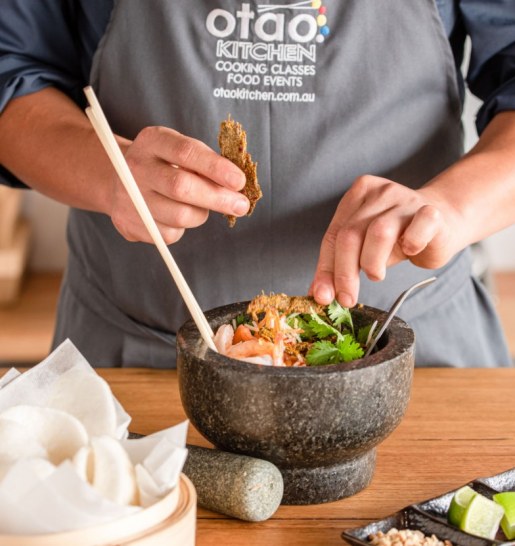
Lastly, the mortar and pestle. You need this to pulverize spices and herbs, among other exotic ingredients, to turn them into paste and sauces. Once you start with Asian cooking, you’ll realize there’ll be plenty of this!  

Look for a non-porous mortar and pestle, so it won’t wind up absorbing the oils and spices. Even if you have a dishwasher, handwashing your mortar and pestle after use is most recommended. 

Conclusion  

Whether you’re an aspiring cook, a person trying to be the best homemaker or an expert chef for Asian cooking, the list above uniformly applies to all of you as the essentials. It would be best if you had those in your kitchen. As you experiment with more Asian dishes, that’s when you can start investing in more to lengthen your list of Asian equipment to have.

Like the nature of many Asian households, you should also invest in good kitchen equipment to last through many years of cooking. For many Asian families, their food becomes more distinct and flavourful when prepared with tools that have gone through years of cooking, seasoned in time, than a brand new one. From Vietnamese pho to Chinese noodles and everything in between, now you can feel more confident with your Asian cooking as you’re armed with the right equipment. 


Learn more

4 Detox Smoothie Recipes For Effective Weight Loss

At the start of a new season or before a special event, many people choose to go on juice cleanses, also known as detox smoothies. These are healthy ingredients and drink-based diets to assist in digestion, remove toxins from organs, and assist in weight loss. They can also be used after an occasion of indulgence to get the body back to normal.

Furthermore, detox smoothies for losing weight require a lifestyle change of lowered calories, increased hydration, and exercise for the best results. So, if you’re looking to incorporate smoothies into your diet and vastly improve your daily nutritional intake, then this is one of the healthiest ways to do it.

Here are four smoothie recipes for effective weight loss:

1. Blueberry, Banana, And Ginger Smoothie

If you’re looking to sip on a rougher smoothie with texture and pulpy goodness to make it feel more like a fruit salad, this drink has to be one of the best. It’s the perfect combination of complex carbs that assist in managing cholesterol, reducing inflammation while naturally increasing potassium. Not to mention the high antioxidant count when these three products are consumed together.

Furthermore, it’s considered one of the best manganese and high folate smoothies to try out after a weight loss-focused workout to replenish your energy. To prepare this drink, you simply need to slice up the banana and grate a teaspoon’s worth of ginger. Then, you can add the blueberries as a whole to the blender.

Don’t blend this mix for too long to keep the consistency thick and filling. Otherwise, you can add a cup of plain sugar-free yoghurt to work as your thickening agent.

2. Kale And Apple Smoothie

Also known as the green smoothie, the kale and apple smoothie is one of the most popular detox smoothies because kale is considered a superfood and is consumed in its natural state. It’s packed with essential daily needed vitamins such as iron, vitamin K, and antioxidants. What’s more, this finely blended mix is excellent to store as a drink without losing its taste and texture.

Meanwhile, the apple provides fibre and is slow to digest, making you feel fuller for longer and minimizing the need to continuously eat—an essential part of weight loss. You can have it as a breakfast drink to replace your usual sugary morning cereal. To make it, you can place kale stems and unpeeled slices of apple into a blender with water or crushed ice until it’s smooth. If the taste is a bit bitter, try using Fuji apples in your mix to make it sweeter.


3. Pineapple And Celery

Celery is a greatly beneficial vegetable to consume due to its high water, low-calorie contents, as well as important nutrients such as potassium and vitamin C. Furthermore, it’s also known to help treat digestion and gastric issues associated with a poor diet. Thus, it plays an important role in keeping your bowels regular and hydrated, as well as making you less bloated.

Having said that, it’s not the easiest food to consume because of its highly fragrant and bitter taste that can be off-putting to some. That's where the pineapple comes in to provide some fruity flavour, more vitamin C, and act as a natural sweetener. To make this smoothie drink, you have the option of dicing up the celery and pineapple into segments before adding them to the blender or juicing them separately and only using the strained juice. Add some crushed ice and lime juice to your blend to enhance its tropical drink flavour.

4. Grapefruit And Watermelon Smoothie

This is the summer smoothie that’s perfect to beat the heat and help you lose a few pounds around your middle section. This, along with its high fibre content, is why it's popular among weight loss consumers. To add to this, watermelon has super hydrating properties and an amino acid, which can assist your body in fat burning. Thus, together, they make a delicious drink ideal for trimming down.

There’s quite a bit of preparation to this smoothie compared to the others, and it includes de-peeling the grapefruit and watermelon, slicing them up then removing the seeds. In this case, you can opt for 100% watermelon or grapefruit juice with no sugar instead and blend. If you’d like to add more substance to the smoothie and make it a filling breakfast drink, you can add some flaxseed, rolled oats, protein powder, or green tea powder.


Conclusion

Detox smoothies can help you lose some weight with their combination of nutrients and low-calorie count. They can also be used as a cleanse to restore your boy’s digestive functioning if you’ve been weighed down by processed foods.

All the fruit and vegetable ingredients can be chopped up and blended with any liquid of your choosing and extra healthy and raw food products to join the mix. Once this is done, you can have them at any time of the day to supplement or replace meals for effective slimming down.


Learn more